Keep the first note close
Write the fragment first, choose one detail, then make a sketch, collage, scene or poem from it. The finished work may add things; marking those additions lets the original memory remain useful.

Notice
Choose what is actually available.
Record
Keep the first note alongside the work.
A dream can leave one useful thing behind: a blue doorway, the sound of a lift, a hand holding a feather. You do not need a complete plot, a lucid dream or an explanation of the image before making something from it.
This is a waking creative workflow, not a way to recover missing dream content. Its purpose is simpler: preserve the fragment you have, make a response to it, and avoid losing track of where remembered detail ends and present invention begins.
Begin with the note, not the finished picture
Before opening a drawing app or searching for materials, make a small note in ordinary words. Write the fragment, any feeling you remember within the scene and any uncertainty. ‘A yellow boat; perhaps a flooded hall; sound unclear’ is enough. It gives the work a starting point without pretending the memory is more complete than it is.
If you already wrote a journal entry, copy only the line you want to use. Keep the original entry dated and unchanged; a later artwork should not silently replace it.
Choose one detail that has some weight
Choose a detail because it returns clearly or interests you now, not because it must contain a hidden answer. It might be a shape, a colour, a place, a movement, a line of speech or the contrast between two things. One detail gives the work a centre and leaves you free to stop before a fragment turns into an obligation.
What can I describe plainly?
Write the visible or audible detail without interpreting it first.
What do I want to explore?
Choose a mood, texture, contrast or question for the artwork, knowing that this is a present choice.
What is missing?
Name a gap if it matters. A blank area can remain blank in both note and work.
You can choose a detail even when you do not know why it stayed with you. A remembered red staircase is sufficient material. It need not become a symbol, a prediction or evidence of a particular state of sleep.
Pick a form that suits the fragment
A sketch can hold a shape, a collage can hold incompatible textures, a short scene can follow movement, and a poem can keep a sound. None needs to preserve every remembered fact.
Set a modest boundary: one page, ten minutes, three cut-out pieces or six lines. You may return later, but do not have to finish the work that morning.
Mark what you added while awake
Making choices is not a mistake. You may change scale, add a character, move the setting or give a scene an ending. Simply mark those choices as later additions in a margin, caption or separate note. This helps when the work becomes more memorable than the original dream fragment.
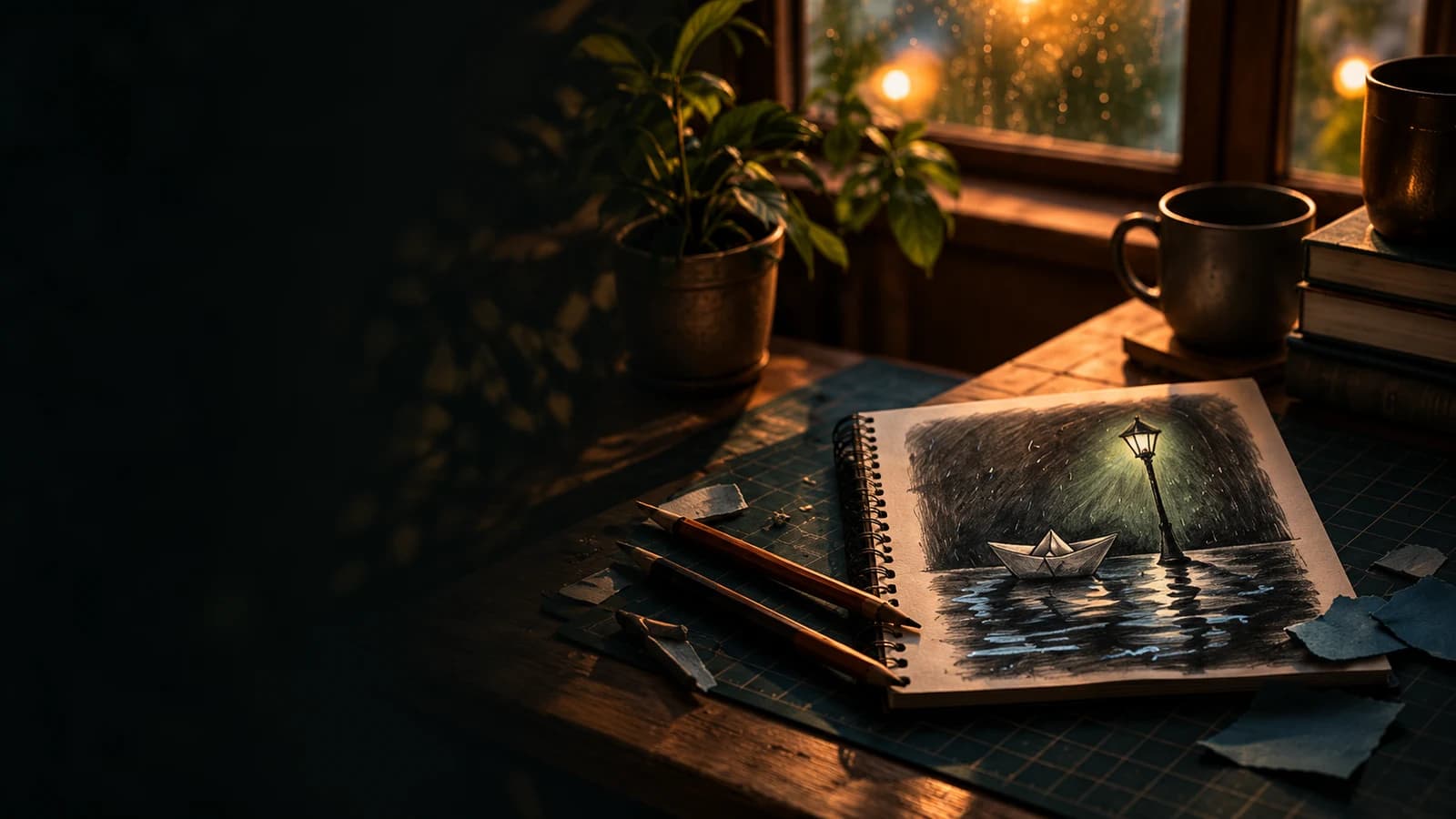
A short key is enough: ‘Remembered: paper boat, green light, water sound. Added while making: windows, dark clouds, title.’ The key does not make the artwork less imaginative. It tells a future reader, including you, what the work is responding to.
Date:
Original dream note:
One detail I chose:
Form I am making:
Details added while awake:
Caption or title:
What I want to remember about this version:
Give the work a small, honest caption
A caption can keep a finished piece connected to its source. Include the date if you know it, name the fragment and state that other choices were made later. If the date is uncertain, write ‘date unknown’.
For example: ‘Paper boat under a green light, made from a remembered fragment noted in March. The windows and clouds were added while drawing.’ That is enough context for a sketchbook, a folder or a private share with someone you trust.
What a related study does and does not say
Haar Horowitz and colleagues (2023) compared four groups: sleep-onset or wake conditions, each with or without tree-themed incubation, followed by tree-related creative tasks. The randomised study analysed 49 participants. It did not concern lucid dreams, and it does not show that this waking exercise will increase anyone’s creativity or explain a particular artwork. Haar Horowitz et al. (2023)
You do not need a study to justify a small creative response. Keep the source note and present work in a relationship you can understand later, and keep ordinary rest ahead of any wish to obtain material for art.
Let the work remain a response
A dream-derived piece can be moving without becoming a verdict about what the dream meant. If an association arrives while you make it, write it as a present association. If nothing arrives beyond the image, the image may still be enough.
The fragment is the beginning of the work, not a demand for a complete story.
Sources and further reading
- Haar Horowitz et al. (2023)Targeted dream incubation at sleep onset increases post-sleep creative performance. The study concerns its own sleep-onset prompt and task context, not lucid dreaming or this waking workflow.